Project Type: MSc Urbanism Studio | KU Leuven, Fall 2013
Redesigning the Urban Fabric of Brussels North
Location: Brussels North, Belgium
Context & Problem
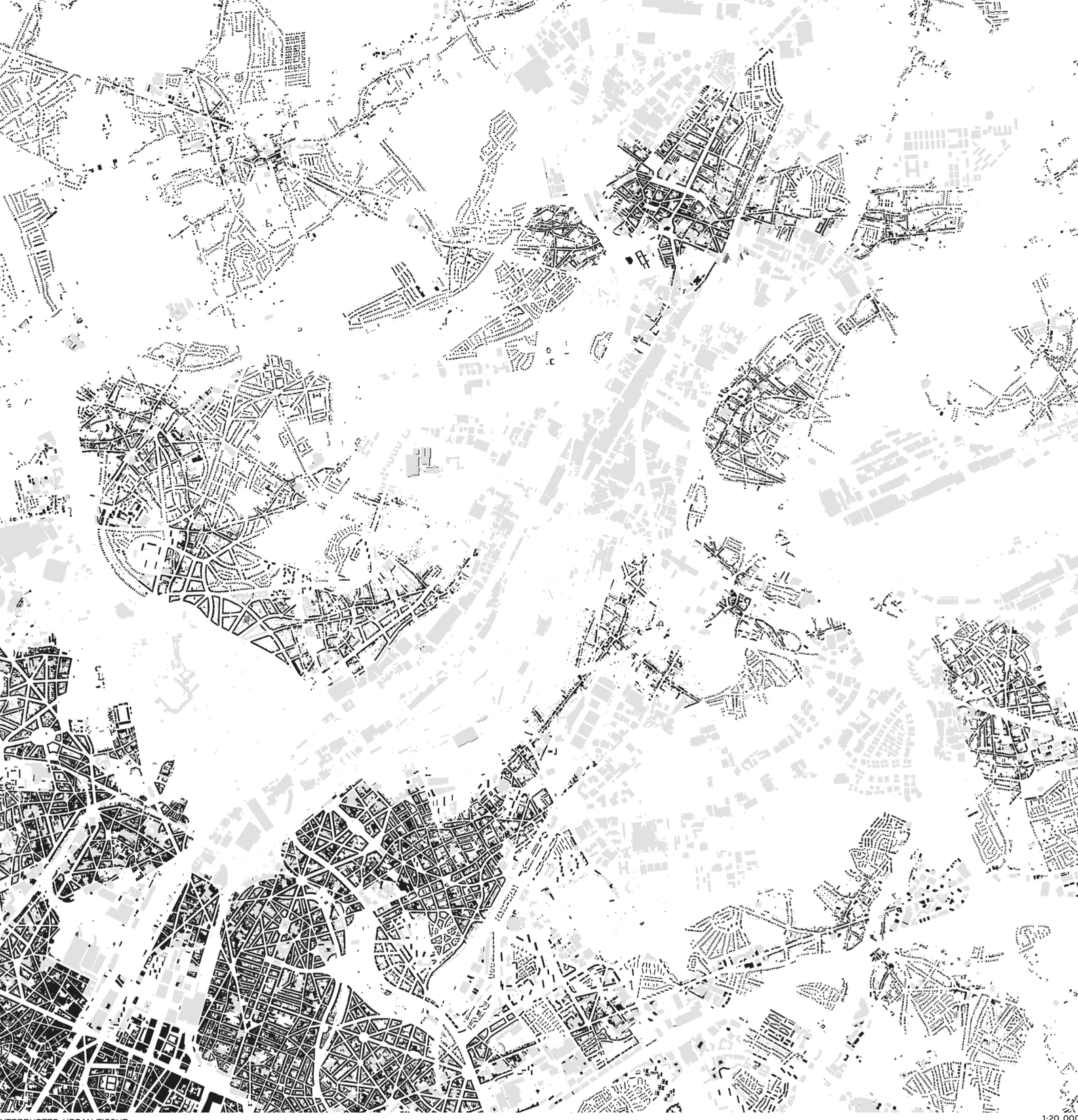
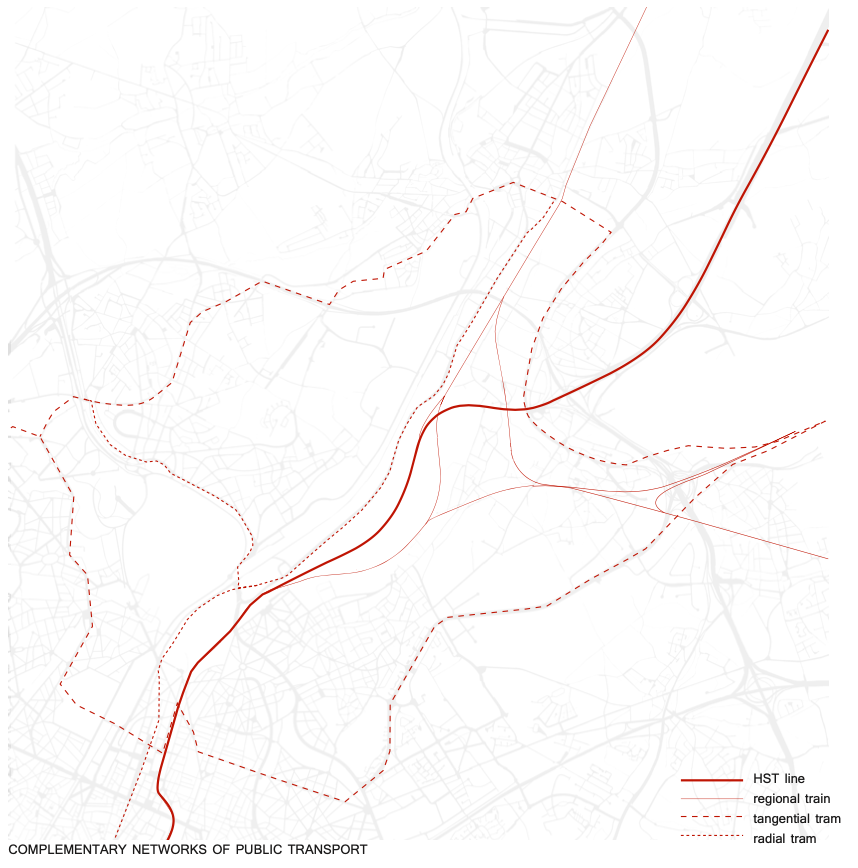
The Brussels North area is a fragmented and underutilized post-industrial corridor, severed by infrastructure and defined by spatial disconnection. Once an active logistics and industrial strip, it now suffers from environmental degradation, transit bottlenecks, and a lack of civic cohesion. Despite proximity to strategic infrastructure like the HST (high-speed train) station and the canal, the area remains peripheral in terms of everyday urban life.
This studio project at KU Leuven aimed to explore the spatial, ecological, and mobility-related potential of this corridor, developing a phased vision for re-integrating it into Brussels’ urban metabolism.

Design Framework
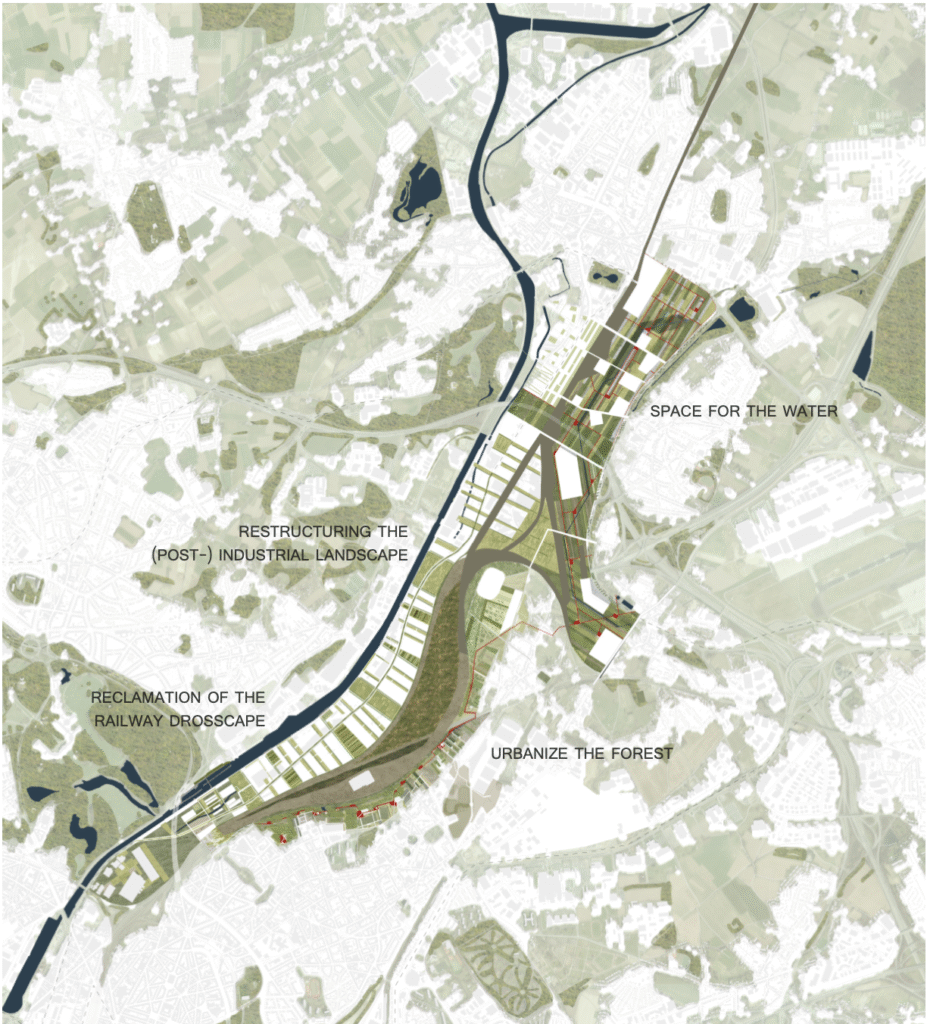
The core concept revolved around re-imagining Brussels North as a central green and productive landscape corridor, rather than a barrier zone. The proposal was structured in three steps:
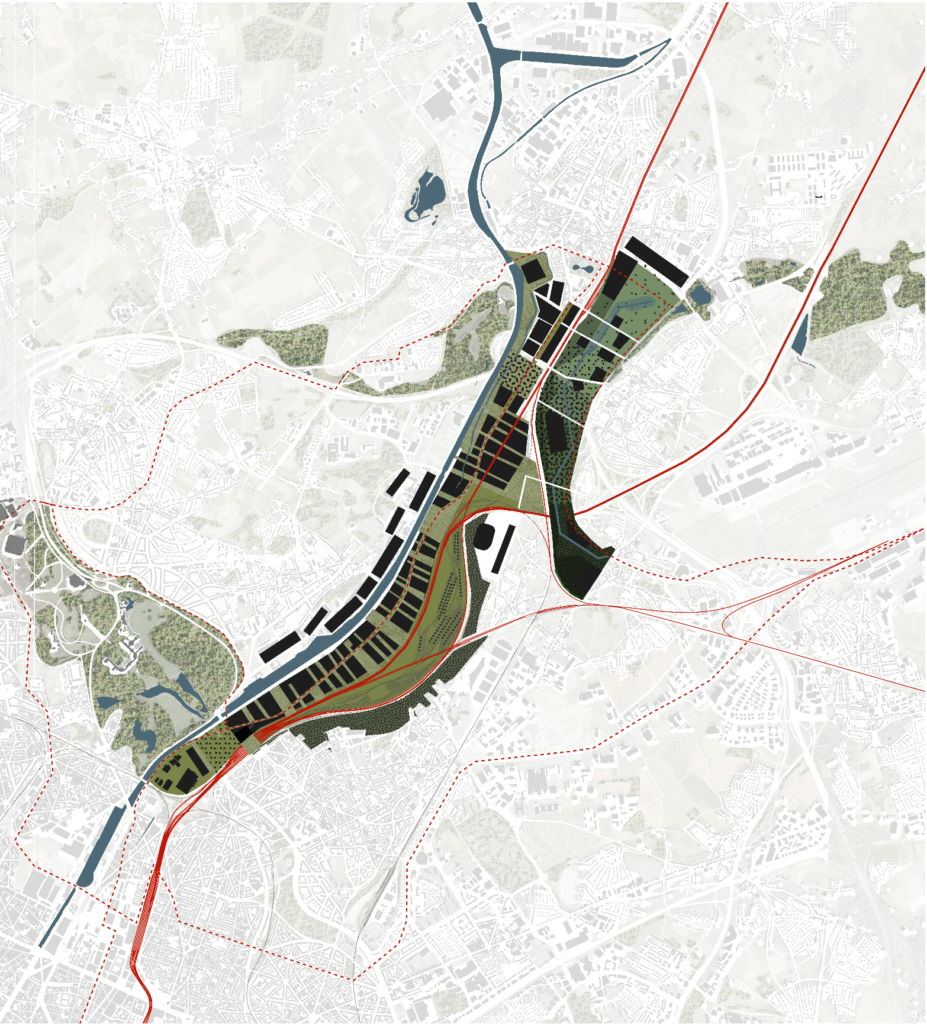
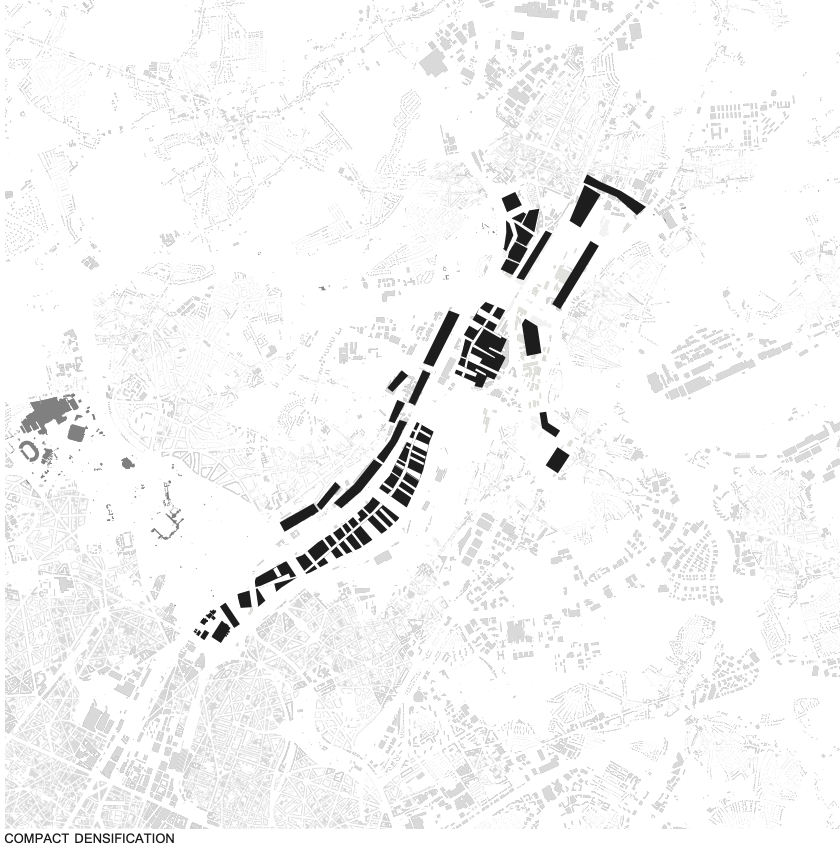
PROJECT: Designing hybrid urban conditions that merge ecological buffers, productive green zones, and densified urban tissue with public infrastructure.
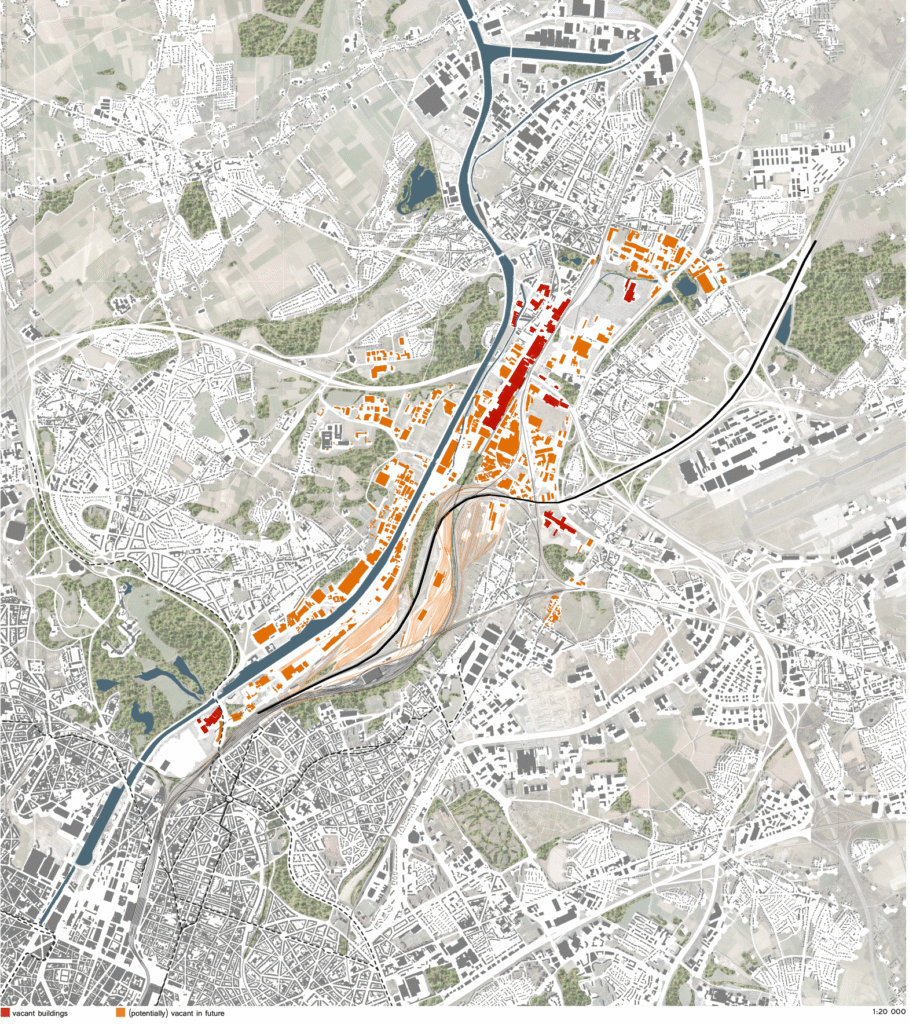
ANALYSIS: Mapping layers of fragmentation, green voids, transit flows, and urban tissue disconnections.
STRATEGY: Proposing landscape-led urbanism, connectivity through non-motorized mobility, and transit-oriented development.
Key Innovations
- Green as Centrality: The green network became the generator of spatial logic, offering cooling, recreation, and spatial hierarchy.
- Mobility Shift: Car infrastructure was minimized in favor of walkability and public transit. A new HST node restructured flows.
- Productive Landscape: Vacant and degraded lands were repurposed for community gardens, afforestation, and ecological buffers.
- Resilience-Based Zoning: Flood margins and talus lands were mapped for ecological roles, not just real estate development.
- Afforestation & Reclamation: The railway’s ‘drosscape’ was transformed into a forested belt, a new lung for Brussels’ northern edge.


Reflection
This was not just a design proposal but a systemic rethink of how post-industrial European urbanism can confront climate, mobility, and equity at once. Working with a multidisciplinary team, we explored the ethical and tactical roles of landscape in stitching the urban fabric.
It was a lesson in using softness to solve hard problems, infrastructure, economy, and fragmentation.
Brook Abebe
Urbanist. Strategist. Educator.
For inquiries or collaboration: [contact]
Brook Abebe, Marjolein Lyssens, Caterina Rosso, Anne-Michèle Zewaert
Urbanism Studio, MaHS–MaUSP, KU Leuven (2013)

